.png)
Biodiversity
Our vision of biodiversity, rewilding and regnerative farming
.png)
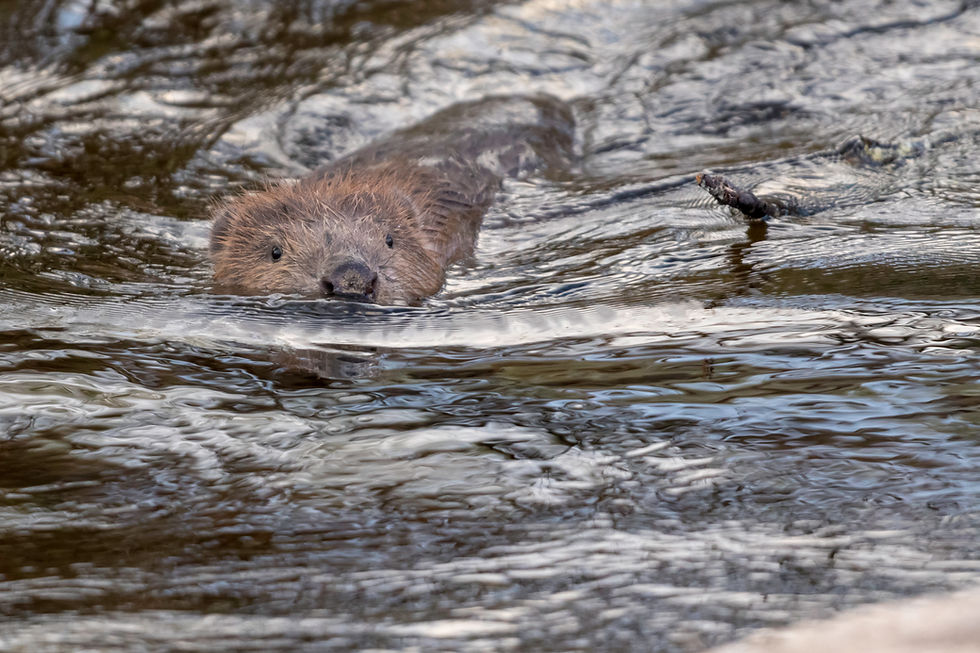
Photo by: Elliot McCandless from The Beaver Trust
Ewhurst Park is proud to have been the release site for the first beavers back in Hampshire for over 400 years! Our breeding pair, Hazel and Chompy came from the River Tay in Scotland to our enclosure in January 2023, and have had kits every year since 2024. 2024 kit Bobbi was caught in February 2026 and wild released in Cornwall. We work closely with The Beaver Trust to manage numbers, ensuring that there are never more beavers than food and space, and relocating animals to other projects helps to support the amazing work that these ecosystem engineers are doing.
Estate-wide Biodiversity
Across the estate, through regenerative farming techniques and rewilding, we’re creating a space that gives back and has a positive impact on the world we live in – a progressive approach to conservation. It’s about restoring essential ecosystem functions so that they nature can take care of itself, repair ecological damage and restore degraded landscapes; and as a result we hope to see wildlife’s and plant life's natural rhythms create wilder, more biodiverse habitats.
Mammals
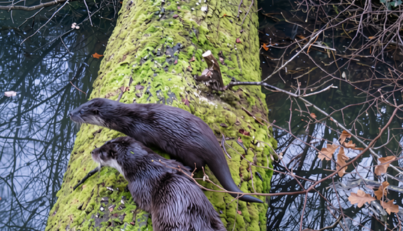
In January 2025, our wildlife cameras recorded a female otter with her pup — the first recorded sighting of otters at Ewhurst Park in more than 70 years. Otter spraints have since been recorded regularly, and members of the team have also been fortunate enough to spot otters in the pond and lake.
Other mammals recorded through wildlife cameras and field sightings include polecat, stoat, badger, fox, hare, roe deer, shrew, field vole, harvest mouse and mole.
Birds
In 2025, the team recorded 100 bird species across the estate — 10 more than in 2024 — including 21 red-listed and 23 amber-listed species. These records included both breeding birds and species observed flying over the estate.
One of the highlights was the sighting of a white-tailed eagle flying over Ewhurst Pond. In 2026, breeding skylarks became a particularly noticeable presence across the park, while lapwing, woodcock, yellowhammer, linnet and house martin continued to be regularly recorded.
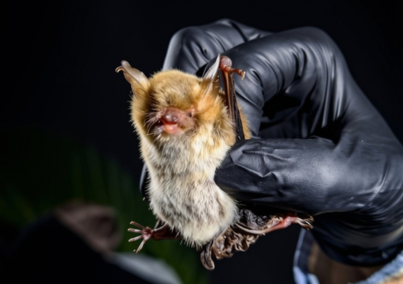
Working alongside Hampshire Bat Group, we have identified 10 of the UK's 18 resident bat species using the park regularly.
Through a combination of static and mobile bat detectors, tree-climbing surveys and trapping work, the species recorded include noctule, Leisler's bat, serotine, brown long-eared bat, all three pipistrelle species — common, soprano and Nathusius' — as well as Natterer's bat, Daubenton's bat and the rare barbastelle.
bats
Invertebrates
Expert entomologist Graeme Lyons recorded several nationally rare and scarce invertebrate species during surveys in 2025.
2026 has also been a strong year for butterflies, with purple emperor, purple hairstreak and brown argus recorded at Ewhurst Park for the first time, while clouded yellows were recorded for the second consecutive year.
The grasslands have also supported a wide variety of other species, including scarlet tiger moths, elephant, poplar and hummingbird hawk-moths, emperor dragonflies and black-tailed skimmers.
The discovery of caddisfly and mayfly larvae, alongside the continued presence of otters, are also encouraging signs of the health and improving quality of the estate's aquatic habitats.

We’re using conservation grazing, allowing our much-loved animals to roam, including heritage breeds such as Longhorn cattle and Tamworth pigs. Large livestock will be able to interact and positively disturb the landscape to create more habitat opportunities.
We are embracing a more considered approach to land management — one that allows natural processes to take the lead. By reducing intervention, the landscape begins to reshape itself, encouraging the return of wildlife, the development of new habitats, and a more resilient ecosystem. Rather than directing every outcome, the focus is on creating the conditions for nature to thrive.
Rewilding
